

The Leather Debate in 2026: More Complex Than Ever
The real vs vegan leather debate has moved far beyond simple binaries. In 2026, “vegan leather” encompasses everything from low-quality PU plastic to sophisticated plant-based materials that genuinely rival traditional leather. Understanding the full landscape is essential for making a truly informed choice.
Traditional Leather: The Baseline
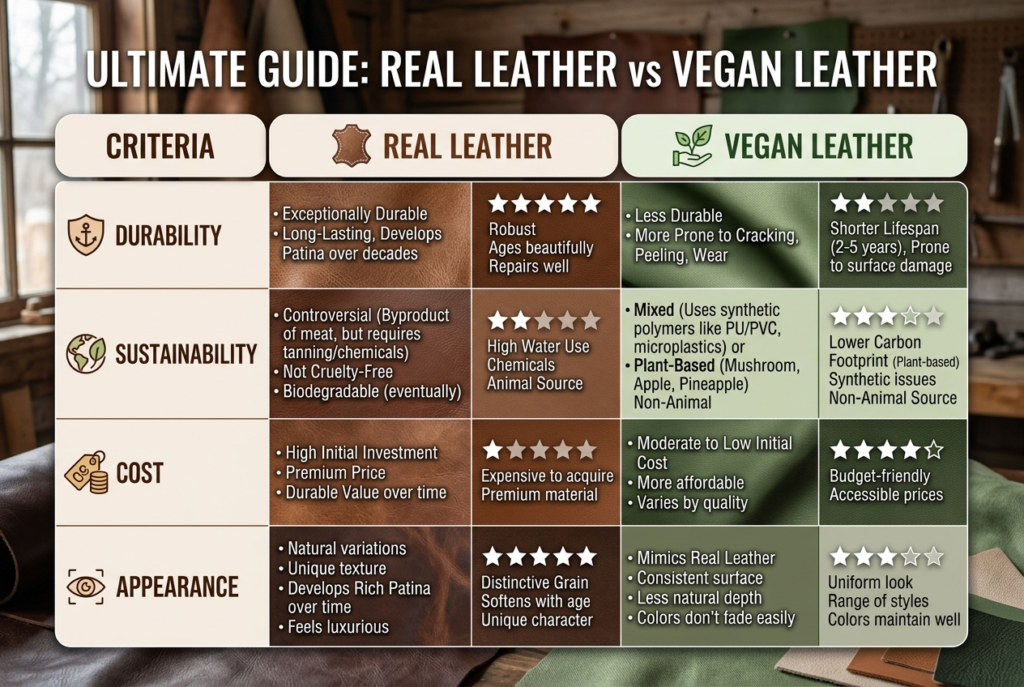
Real leather — from cowhide, lambskin, deer, or exotic animals — is a natural material with genuine advantages: exceptional durability (20+ year lifespan), breathability, unique character development (patina), superior abrasion resistance, and a texture that synthetic materials struggle to replicate.
PU/Polyurethane “Vegan” Leather: The Common Alternative
The most widely available vegan leather is PU (polyurethane), a plastic-based material. Honest assessment: lower initial cost, consistent appearance, no animal products used. However: lifespan typically 2-5 years (peeling/cracking is common), made from petroleum products (not inherently eco-friendly), and doesn’t breathe like real leather.
Next-Generation Plant-Based Leathers
This is where 2026 gets genuinely exciting. Desserto (cactus leather): made from nopal cactus, certified organic, partially bio-based. Mylo (mushroom leather): grown from mycelium, rapidly renewable, highly tactile. Pinatex (pineapple leather): made from pineapple leaf fiber, agricultural by-product, distinctive texture. These materials offer genuine sustainability advantages and increasingly impressive performance.
Durability Comparison
Full-grain leather: 20-50+ years with care. Top-grain leather: 15-25 years. Genuine leather: 5-10 years. High-quality PU: 3-6 years. Budget PU: 1-3 years. Premium plant-based: currently 5-10+ years (improving rapidly).
Environmental Impact: The Nuanced Truth
Real leather from tanneries with poor practices: high environmental impact. Real leather from LWG-certified tanneries using by-products: moderate impact. PU leather: lower animal impact but high petroleum dependency. Plant-based leathers: currently the lowest environmental impact, but production scales are still limited.
Appearance & Texture
Real leather: unique, natural grain variation, develops character over time. High-quality PU: consistent, uniform appearance. Premium plant-based: varies by material — Mylo is remarkably similar to real leather; Pinatex has a distinctive texture that’s beautiful but clearly different.
Making Your Choice in 2026
Choose real leather if: durability is your primary concern, you appreciate natural material development, and you’re buying from brands with responsible sourcing. Choose vegan/plant-based if: avoiding animal products is important to you, you’re drawn to innovative materials, and you’re willing to accept a currently shorter lifespan.
Q: Is vegan leather as durable as real leather?
A: Currently, no — real leather (especially full-grain) significantly outlasts most vegan alternatives. However, the gap is narrowing rapidly with next-generation plant-based materials.
Q: Is PU leather the same as vegan leather?
A: PU is a common form of vegan leather, but they’re not synonymous. Vegan leather now includes plant-based options (cactus, mushroom, pineapple) that are very different from petroleum-based PU.